
Artist
Fred Berman
Milwaukee 1926 — 2011 Milwaukee
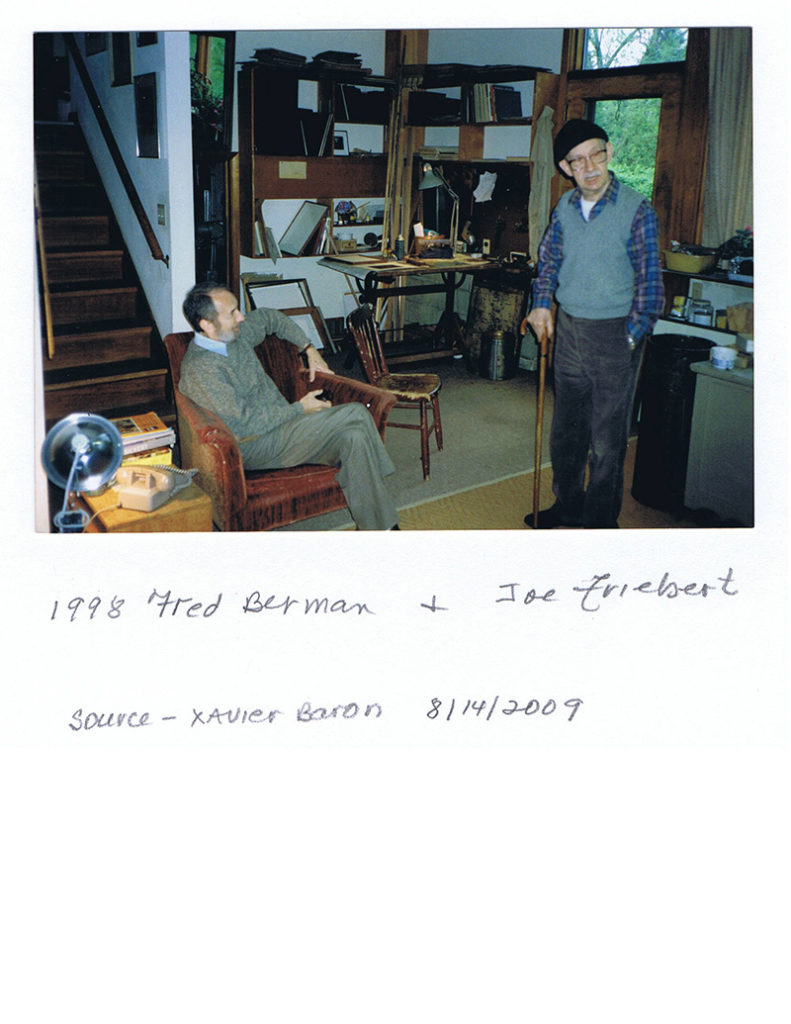
Milwaukee-born Fred Berman received degrees in art from Milwaukee State Teachers College (now the University of Wisconsin–Milwaukee [UWM]) and the University of Wisconsin–Madison. He began teaching at the Layton School of Art in 1949 and in 1960 joined the art faculty at UWM, where he taught for thirty-three years. Berman’s art shifts between the abstract and representational, often merging the two to form intentionally ambiguous images. His media included painting, assemblage, and photography. Berman exhibited widely in Wisconsin and beyond, notably at the 1956 Venice Biennale, where he was the youngest American artist represented. His work is found in many Wisconsin museums and private collections.
Collection Highlights
White City #11
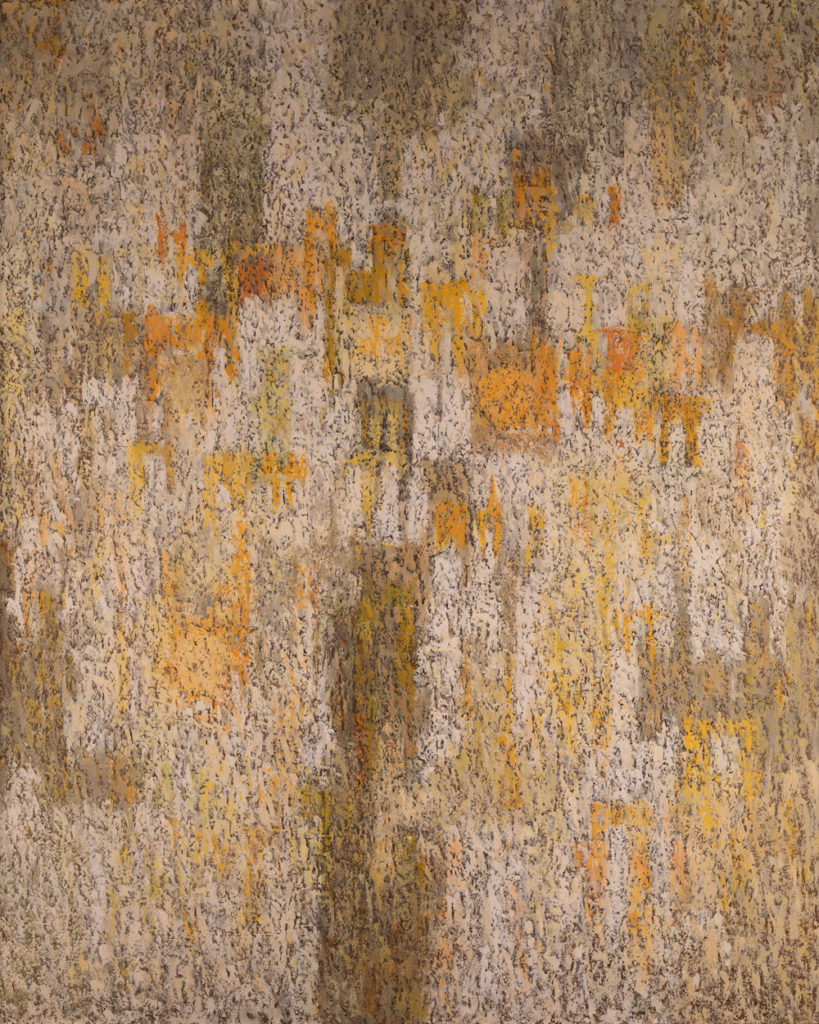
Berman captured “the eerie radiance of American cities” in White City #11, with steeples, tall buildings, doors, windows, and arches coalesce into a shimmering, floating vision of white, ivory, and gold—an arresting apparition seen through a veil of stippled, feathery brushstrokes. It evokes the light-filled, tonal images of the nineteenth-century British painter J. M. W. Turner, whom Berman particularly revered. As atmospheric as it is architectural, White City #11 exemplifies the balance Berman achieved in all his work between abstraction and representation.